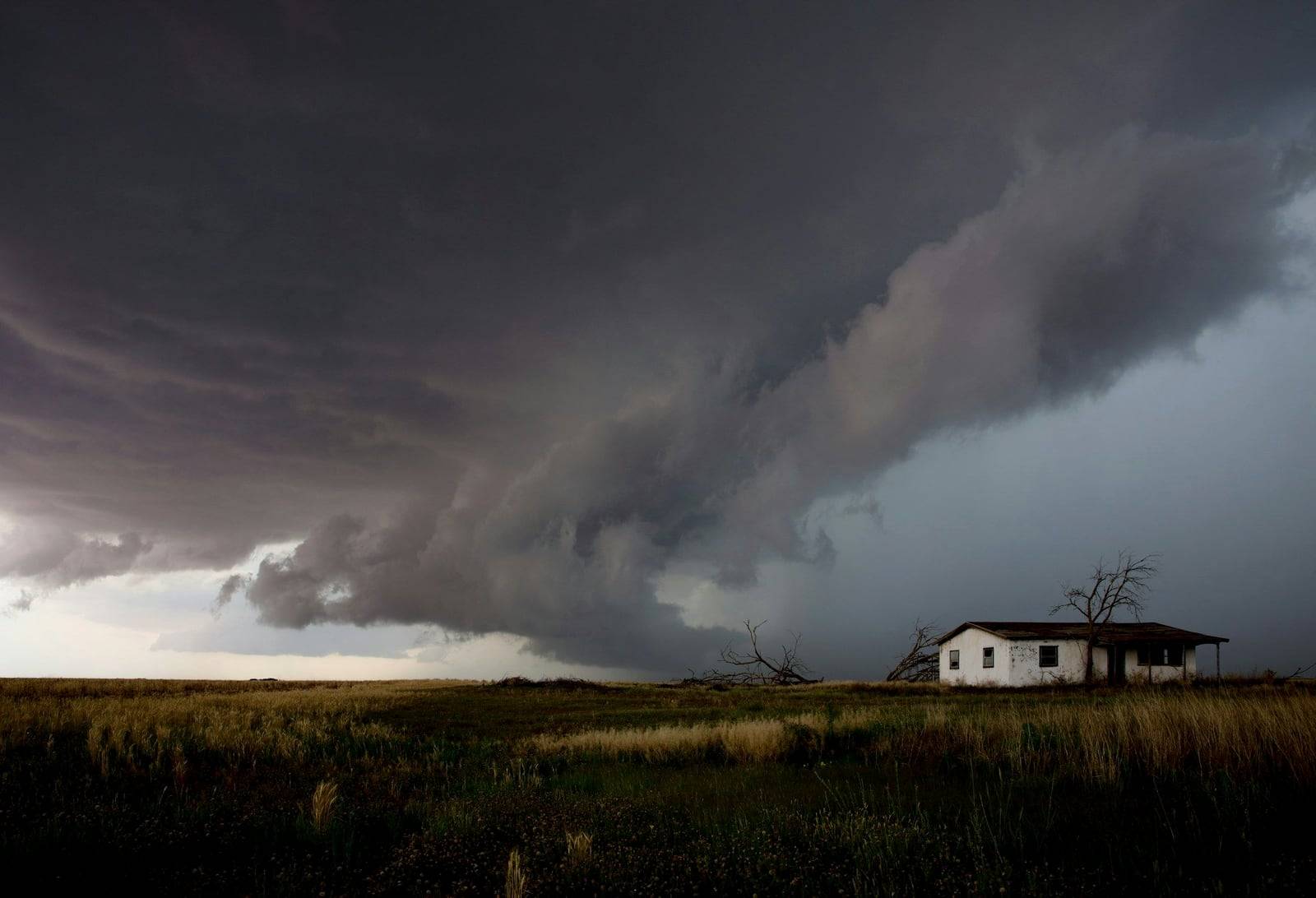
Storm and hail damage
After the storm, in plain words.
What to look for, what to do first, and how a roof insurance claim works in Texas, start to finish. Read it before anyone knocks on your door.
What to look for, from the ground
- Dents in gutters, downspouts and the metal vents on the roof
- Dings in the fins of the outdoor AC unit, or on the mailbox and grill lid
- Piles of dark granules where the downspouts empty out
- Shingles or pieces of them in the yard after wind
- New water stains on ceilings, or damp insulation in the attic
Soft metal shows hail first. If your gutters and AC unit are dented, the roof very likely took hits too, even if you can’t see them from the yard.
What to do first
- 1Take dated photos of the yard, the gutters and anything dented. Hail melts; photos don’t.
- 2Stay off the roof. Wet shingles are slick and storm-damaged ones can tear under a boot.
- 3If water is coming in, call us for a tarp. Move things away from the leak and catch the drip.
- 4Look up your policy’s deadline for reporting damage, and your deductible.
- 5Don’t sign anything with someone who knocks on your door the morning after.
Hail, wind or a leak: how we tell them apart

Hail
Hail leaves round bruises where the granules are knocked off and the mat underneath is cracked; press one and it feels soft. They’re scattered at random and usually worst on the slopes facing the storm. Hail around an inch across (a quarter) and up is when shingles usually start to bruise.

Wind
Wind lifts the shingle tabs, breaks the seal under them and creases them, or tears them off. Look for missing pieces along the edges and ridge, and shingles in the yard. A creased shingle can stay on the roof and still leak.

A leak
Most leaks we find aren’t the shingles at all: they’re flashing at a wall or chimney, a cracked rubber boot around a vent pipe, or a gutter backing up under the roof edge. That’s why we check the attic too.
On the roof, the inspector marks hail hits with chalk inside a 10-by-10 foot test square on each slope and photographs them, so you and your adjuster see the same thing we did. Age wear (curling, cracking, bare spots all over) isn’t storm damage, and we’ll tell you so.
How a roof insurance claim works
- 1
We inspect first, free
We tell you plainly whether there’s storm damage worth a claim. If it’s age, or the repair costs less than your deductible, we say so.
- 2
You file the claim
Only you can file it. You call your insurer or use their app and get a claim number.
- 3
The adjuster visits
Your insurer’s adjuster inspects. We can be there to show what we found, but we don’t negotiate your claim: Texas law bars a roofer from acting as your adjuster.
- 4
The insurer pays in parts
Often a first check for the actual cash value, then the rest (the depreciation held back) once the work is done and proven.
- 5
You pay your deductible
Your deductible is yours to pay, by law. We collect it like any other part of the price.
Every policy is different. Your declarations page shows your deductible (often a percentage of the home’s insured value for wind and hail in Texas) and whether the roof is covered at replacement cost or actual cash value. Your agent can explain yours; we can’t.
Your deductible is yours to pay. That’s the law.
Texas Insurance Code chapter 707 says the insured person pays the deductible. Business and Commerce Code section 27.02 makes it a crime (a Class B misdemeanor) for a roofer to pay, waive or absorb it, or to hand it back as a rebate or credit, without the insurer’s consent.
We never do, and every contract we write over $1,000 on an insurance job carries the notice the law requires, in bold.
We don’t act as your adjuster
Texas Insurance Code section 4102.163 says a roofer may not act as a public adjuster on a home it’s working on. So we’ll show the adjuster what we found and send our photos, but we won’t negotiate your claim for you or sign anything on your behalf.
Before you sign with any roofer
After a big storm, trucks from out of state fill the neighborhoods. Most mean well; some don’t. Ask any roofer, us included:
- Where is your office? Can I visit it?
- Can I have a certificate of insurance, sent by your insurer?
- Is everything in a written contract, with the deductible notice Texas requires?
- Who pulls the city permit, and is it in the price?
- What’s your workmanship warranty, in writing, and who honors it if you leave town?
- Will you ask me to sign anything today? (The answer should be no.)
Water coming in right now?
Call during office hours and a crew can usually tarp the same day, weather and lightning allowing. A tarp costs $275 to $600 and is credited back if we do the repair.